

Hey there, folks! I'm a supplier of thickeners, and today I wanna talk about something super important in our line of work: the solubility of different thickeners.
So, what exactly is solubility when it comes to thickeners? Well, solubility refers to the ability of a thickener to dissolve in a particular solvent, usually water or other liquid media. This property is crucial because it determines how well the thickener can perform its job in various applications.
Let's start with some common types of thickeners and their solubility characteristics.
1. Starch - Based Thickeners
Starch is one of the oldest and most widely used thickeners. It's derived from plants like corn, wheat, and potatoes. When it comes to solubility, it depends a lot on the type of starch and how it's processed.
Native starch has limited solubility in cold water. It forms a suspension rather than fully dissolving. But when heated, the starch granules absorb water, swell, and eventually rupture, releasing amylose and amylopectin molecules. This process is called gelatinization. Once gelatinized, the starch becomes highly soluble in hot water and forms a thick, viscous solution.
Modified starches, on the other hand, are designed to have better solubility. For example, pre - gelatinized starches can dissolve in cold water without the need for heating. They're really handy in applications where heating isn't feasible, like in some instant food products.
2. Cellulose - Based Thickeners
Cellulose is a major component of plant cell walls. Cellulose - based thickeners, such as carboxymethyl cellulose (CMC), hydroxyethyl cellulose (HEC), and methyl cellulose (MC), are widely used in a variety of industries.
CMC is highly soluble in water, and it can form clear and stable solutions. It's often used in food, pharmaceuticals, and personal care products. The solubility of CMC can be affected by factors like the degree of substitution (DS). Higher DS values generally lead to better solubility in both cold and hot water.
HEC is also very soluble in water over a wide range of temperatures. It has good thickening properties and is used in products like paints, adhesives, and detergents. MC has unique solubility behavior. It's soluble in cold water but becomes insoluble when heated. This property makes it useful in applications where a gel - like structure is needed upon heating, such as in some food products and construction materials.
3. Gum - Based Thickeners
Gums are natural polymers that come from plants, seaweeds, or microorganisms. Some common gum - based thickeners include xanthan gum, guar gum, and carrageenan.
Xanthan gum is highly soluble in cold water and forms a very viscous solution even at low concentrations. It has excellent stability over a wide range of pH and temperature. This makes it a popular choice in food, beverage, and cosmetic industries.
Guar gum is also soluble in cold water, but it needs some time to fully hydrate and develop its thickening properties. It's often used in food products like ice cream and salad dressings.
Carrageenan is extracted from seaweeds and has different solubility depending on its type. Kappa - carrageenan forms gels in the presence of potassium ions and is soluble in hot water. Iota - carrageenan forms softer gels and is also soluble in hot water with good solubility in cold water under certain conditions. Lambda - carrageenan is soluble in cold water and doesn't form gels easily.
4. Synthetic Thickeners
Synthetic thickeners, such as polyacrylic acid and its derivatives, are widely used in industries like textiles, coatings, and adhesives.
Polyacrylic acid thickeners are usually supplied as powders or solutions. They're highly soluble in water and can be neutralized with bases to increase their thickening efficiency. The solubility and thickening performance of these synthetic thickeners can be adjusted by changing the molecular weight and the degree of cross - linking.
Now, let's talk about why understanding the solubility of thickeners is so important for our customers.
In the food industry, the solubility of thickeners affects the texture and stability of products. For example, if a thickener doesn't dissolve properly in a sauce, it can lead to lumps and an uneven texture. In pharmaceuticals, proper solubility ensures that the thickener can disperse the active ingredients evenly in the formulation. In the coatings industry, the solubility of thickeners impacts the application properties, such as flow and leveling.

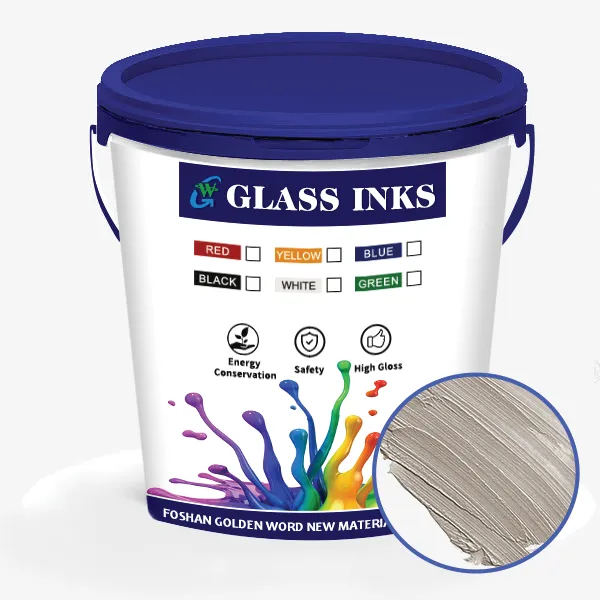
If you're in the market for high - quality thickeners, you know that solubility is just one of the many factors to consider. But at our place, we've got a wide range of thickeners to meet your specific needs. Whether you need something that dissolves easily in cold water for a quick - mix product or a thickener that can withstand high - temperature processing, we've got you covered.
And hey, if you're also interested in related products, check out our High Transparency Tableware Glass Ink, Decorative Cup Scratch - resistant Low Temperature Glass Ink, and Dashboard Insulating Touch Screen Glass Ink. These inks are designed to work in harmony with our thickeners in some applications.
If you're curious about which thickener is the best fit for your project, don't hesitate to reach out. We're always happy to have a chat and help you find the right solution. Whether you're a small - scale producer or a large - scale manufacturer, we can provide you with the right amount of thickeners and offer technical support. So, let's start this conversation and see how we can work together to make your products even better!
References
- BeMiller, J. N., & Whistler, R. L. (Eds.). (2009). Starch: Chemistry and Technology. Academic Press.
- Davidson, R. L. (Ed.). (1980). Handbook of Water - Soluble Gums and Resins. McGraw - Hill.
- Lillford, P. J., & Fryer, P. J. (1993). Food Process Engineering and Technology. Blackie Academic & Professional.