

The coating formed by scratch-resistant low temperature glass ink has gained significant attention in various industries due to its unique properties and wide range of applications. As a leading supplier of scratch-resistant low temperature glass ink, we are constantly exploring the characteristics of the coatings it forms, especially their hardness, to provide our customers with high-quality products that meet their specific needs.
Understanding the Nature of Scratch-Resistant Low Temperature Glass Ink
Scratch-resistant low temperature glass ink is a specialized type of ink formulated to be applied on glass surfaces. Unlike traditional inks, it can cure at relatively low temperatures, which is beneficial for glass substrates that may be sensitive to high - temperature processes. This ink contains a combination of pigments, binders, and additives that work together to form a durable and protective coating on the glass.
The main purpose of using scratch - resistant low temperature glass ink is to enhance the surface properties of the glass. It can prevent scratches from daily use, such as abrasion from keys, coins, or other hard objects. This is particularly important in applications where the appearance and functionality of the glass need to be maintained over time.
Measuring the Hardness of the Coating
The hardness of the coating formed by scratch-resistant low temperature glass ink is a crucial parameter. Hardness is defined as the ability of a material to resist deformation, indentation, or scratching. There are several methods to measure the hardness of the ink coating:
Pencil Hardness Test
One of the most commonly used methods is the pencil hardness test. In this test, pencils of different hardness grades (ranging from 6B (softest) to 9H (hardest)) are used to scratch the surface of the ink coating at a specific angle and pressure. The hardness of the coating is determined by the hardest pencil that does not scratch the surface. For our scratch - resistant low temperature glass ink, the coating typically shows a pencil hardness of 3H - 6H, which indicates a relatively high level of scratch resistance.
Nanoindentation
Nanoindentation is a more advanced method that can provide detailed information about the mechanical properties of the coating at the nanoscale. A sharp indenter is pressed into the surface of the coating, and the force - displacement curve is measured. From this curve, the hardness and elastic modulus of the coating can be calculated. Our research has shown that the scratch - resistant low temperature glass ink coating has a nano - scale hardness in the range of a few gigapascals, which is comparable to some traditional hard - coating materials.
Factors Affecting the Hardness of the Coating
Several factors can influence the hardness of the coating formed by scratch - resistant low temperature glass ink:
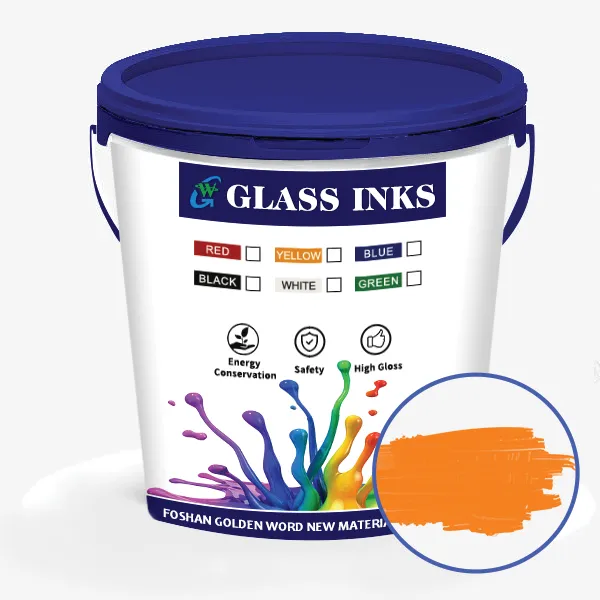

Ink Composition
The type and proportion of pigments, binders, and additives in the ink play a significant role. High - quality binders with strong cross - linking properties can form a dense and hard coating. For example, some of our inks use special epoxy - based binders that can significantly increase the hardness of the coating after curing.
Curing Conditions
The curing temperature and time also affect the hardness of the coating. If the curing temperature is too low or the curing time is too short, the binder may not fully cross - link, resulting in a softer coating. On the other hand, excessive curing may cause the coating to become brittle. Our technical team has optimized the curing conditions to ensure that the coating reaches its maximum hardness while maintaining good flexibility.
Glass Surface Preparation
The condition of the glass surface before ink application is important. A clean and properly pre - treated glass surface can improve the adhesion between the ink and the glass, which in turn affects the overall hardness and durability of the coating. We recommend using appropriate cleaning and etching processes to prepare the glass surface.
Applications and the Importance of Coating Hardness
The scratch - resistant low temperature glass ink with its hard coating has a wide range of applications:
Electronic Devices
In the field of electronic devices, such as smart phones, tablets, and laptops, the glass screens need to be scratch - resistant. Our ink can be used to coat the touch screens, providing a hard and clear protective layer. For example, the Glass Ink For Electronic Display Screens we offer is specifically designed for this application, ensuring that the screens remain clear and free of scratches during daily use.
Home Appliances
In home appliances, such as gas stoves and induction cookers, the glass panels need to be resistant to scratches and high temperatures. Our High Temperature Resistant Gas Stove Panel Glass Ink and Induction Cooker Glass Ink can form a hard coating on the glass panels, protecting them from scratches caused by pots and pans, as well as the high - temperature environment.
ATM Machines
For ATM machines, the insulating touch - screen glass needs to be scratch - resistant to ensure long - term use. Our ATM Insulating Touch Screen Glass Ink can form a hard and insulating coating on the glass, improving its durability and functionality.
Crystal Glass Crafts
In the production of crystal glass crafts, the ink can be used to add decorative and protective coatings. The Glass Ink For Crystal Glass Crafts Product Introduction provides a hard coating that not only enhances the appearance of the crafts but also protects them from scratches during handling and display.
Conclusion and Call to Action
In conclusion, the hardness of the coating formed by scratch - resistant low temperature glass ink is a critical property that determines its performance in various applications. Our company, as a professional supplier of this type of ink, is committed to continuously improving the quality of our products to meet the ever - increasing demands of the market.
If you are interested in our scratch - resistant low temperature glass ink or any of our other glass ink products, we invite you to contact us for further discussions. We can provide you with detailed product information, samples, and technical support to help you choose the most suitable ink for your specific needs. Let's work together to create high - performance glass products with excellent scratch - resistance.
References
- ASTM D3363 - Standard Test Method for Film Hardness by Pencil Test.
- Oliver, W. C., & Pharr, G. M. (1992). An improved technique for determining hardness and elastic modulus using load and displacement sensing indentation experiments. Journal of Materials Research, 7(6), 1564 - 1583.