

Hey there! I'm a supplier of textile chemicals, and today I wanna chat about how textile chemicals affect the drape of fabrics. It's a topic that's super important in the textile industry, and I'm excited to share some insights with you.
First off, let's talk about what fabric drape actually is. Drape refers to how a fabric hangs and falls under its own weight. A fabric with good drape will flow gracefully and form soft folds, while a fabric with poor drape might be stiff and not hang well. It's a key factor in how a garment looks and feels, whether it's a flowing evening gown or a casual shirt.
Now, let's get into how textile chemicals come into play. There are several types of textile chemicals that can have an impact on fabric drape.
Softeners
One of the most common types of textile chemicals that affect drape is softeners. Softeners are used to make fabrics feel softer and more comfortable to wear. They work by reducing the friction between the fibers in the fabric, which makes the fabric more flexible and easier to drape.
There are two main types of softeners: cationic and non - ionic. Cationic softeners are positively charged and are very effective at softening fabrics. They can also provide some antistatic properties. Non - ionic softeners, on the other hand, are neutral and are often used when a more gentle softening effect is needed. For example, if you're working with delicate fabrics like silk or cashmere, a non - ionic softener might be a better choice.
When you use a softener, it can significantly improve the drape of the fabric. The fabric becomes more pliable and will fall more naturally, creating those beautiful folds that we associate with high - quality draping.
Starches and Sizing Agents
Starches and sizing agents are another group of textile chemicals that can affect fabric drape. These chemicals are used to add stiffness to the fabric. They work by coating the fibers, which makes the fabric more rigid.
In some cases, a little bit of stiffness can be a good thing. For example, if you're making a shirt collar or a tablecloth, you might want the fabric to hold its shape. However, if too much starch or sizing agent is used, it can make the fabric too stiff and reduce its drape. So, it's all about finding the right balance.
Dyes and Pigments
Dyes and pigments can also have an impact on fabric drape. When a fabric is dyed, the dye molecules can penetrate the fibers and change their physical properties. Some dyes can make the fabric stiffer, while others can have a minimal effect on drape.
For example, if a fabric is dyed with a heavy - duty dye that contains a lot of chemicals, it might become stiffer and lose some of its drape. On the other hand, natural dyes or dyes that are specifically formulated to be gentle on the fabric can have a less significant impact on drape.
Digital Printing Pretreatment Liquid
Digital printing has become increasingly popular in the textile industry. And here's where our Digital Printing Pretreatment Liquid comes in. This liquid is used to prepare the fabric for digital printing. It helps the ink adhere better to the fabric and can also affect the drape of the fabric.
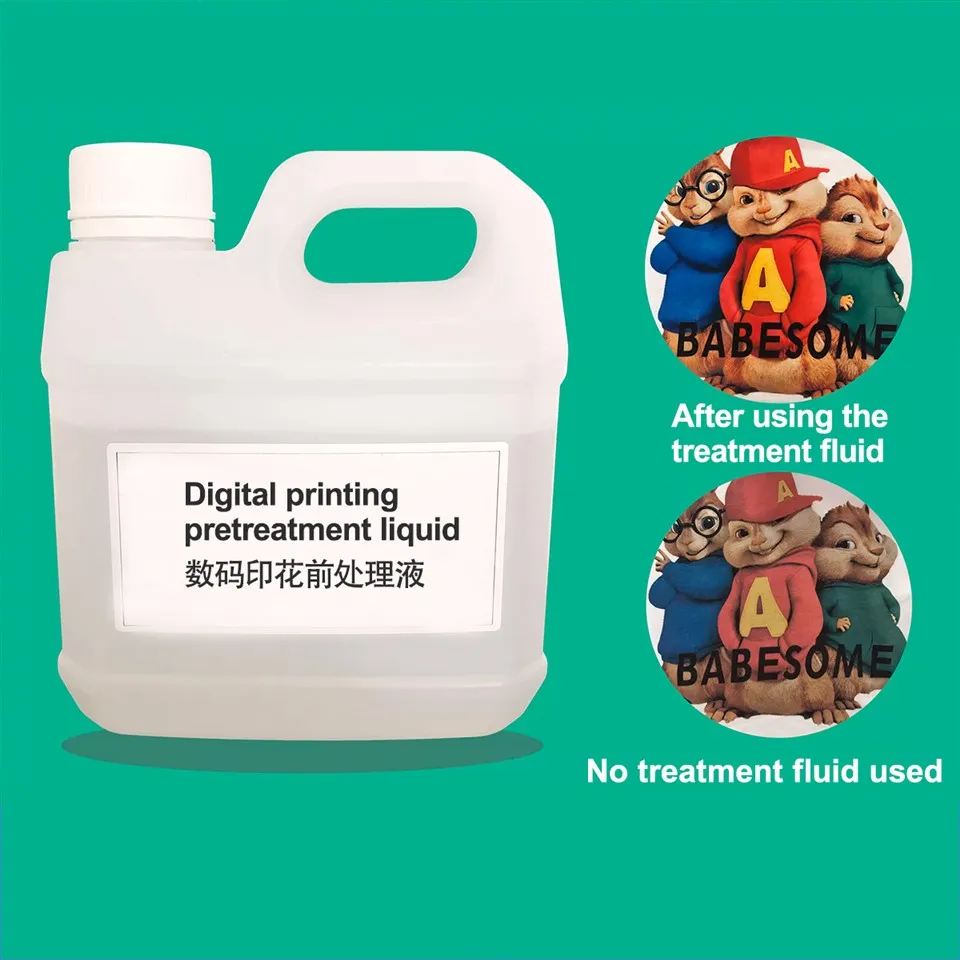

The pretreatment liquid can add a certain amount of stiffness to the fabric, which can be beneficial in some cases. For example, if you're printing a pattern on a fabric that needs to hold its shape, the added stiffness can help the pattern look more defined. However, if you want a fabric with a very soft and flowing drape, you might need to adjust the amount of pretreatment liquid used.
Anhydrous Sodium Sulfate Na2SO4
anhydrous Sodium Sulfate Na2SO4 is another important textile chemical. It's often used in the dyeing process. Sodium sulfate can help the dye penetrate the fabric more evenly.
In terms of drape, the effect of sodium sulfate depends on how it's used. If it's used in the right amount, it can help the fabric maintain its natural drape while ensuring that the dye is evenly distributed. However, if too much sodium sulfate is used, it can cause the fabric to become stiffer and reduce its drape.
So, as you can see, textile chemicals can have a wide range of effects on the drape of fabrics. It's all about understanding how each chemical works and using them in the right way.
If you're in the textile industry and you're looking for high - quality textile chemicals to improve the drape of your fabrics, I'd love to have a chat with you. Whether you're a small - scale designer or a large - scale manufacturer, we can work together to find the right solutions for your needs.
We have a wide range of textile chemicals in our inventory, and our team of experts can provide you with all the support and advice you need. So, don't hesitate to reach out and start a conversation about how we can help you achieve the perfect drape for your fabrics.
References
- Textile Chemistry: Fundamentals and Applications by David Lewis
- Handbook of Textile Fibre Structure, Volume 1: Natural Fibres by David J. Vaughn
- Textile Dyeing and Finishing by Shishir Kumar Datta